Introduction
When it comes to maintaining your boat, few tasks are as critical, yet often overlooked, as marine electrical repair. A reliable electrical system is the heart of your vessel, powering everything from navigation equipment to lights and communication devices. Whether you’re a seasoned sailor or a newcomer to the marine world, understanding the basics of electrical systems can save you time, money, and potentially dangerous situations on the water. This article will guide you through essential tips and techniques for effective marine electrical repair, empowering you to tackle DIY projects with confidence.
Understanding Marine Electrical Systems
The Basics of Marine Electrical Systems
Marine electrical systems differ significantly from standard residential setups. The components are exposed to moisture, salt, and fluctuating temperatures, which can accelerate wear and tear. Key components to consider include the battery, wiring, circuit breakers, and devices like lights and pumps. Understanding the function of each part is crucial when planning any repairs or upgrades.
Common Electrical Issues
Before diving into repairs, it’s vital to recognize the most prevalent electrical issues boaters face. These include:
- Corroded Connections: Saltwater exposure can cause metal components to oxidize, leading to poor connections.
- Battery Problems: Issues such as sulfation or incorrect charging can lead to power failures.
- Faulty Wiring: Frayed or damaged wires can cause shorts or total electrical failures.
- Overloaded Circuits: Too many appliances drawing power can lead to circuit breaker trips.
Safety First
Always prioritize safety. Marine electrical repair can involve working with high voltages and sensitive equipment. Here are some essential safety tips:
- Disconnect Power: Always disconnect the battery before starting any repair work.
- Use Proper Tools: Invest in marine-grade tools and equipment designed to withstand harsh environments.
- Wear Protective Gear: Use gloves and goggles to protect against electrical hazards and debris.
DIY Marine Electrical Repair Tips
1. Start with Diagnostics
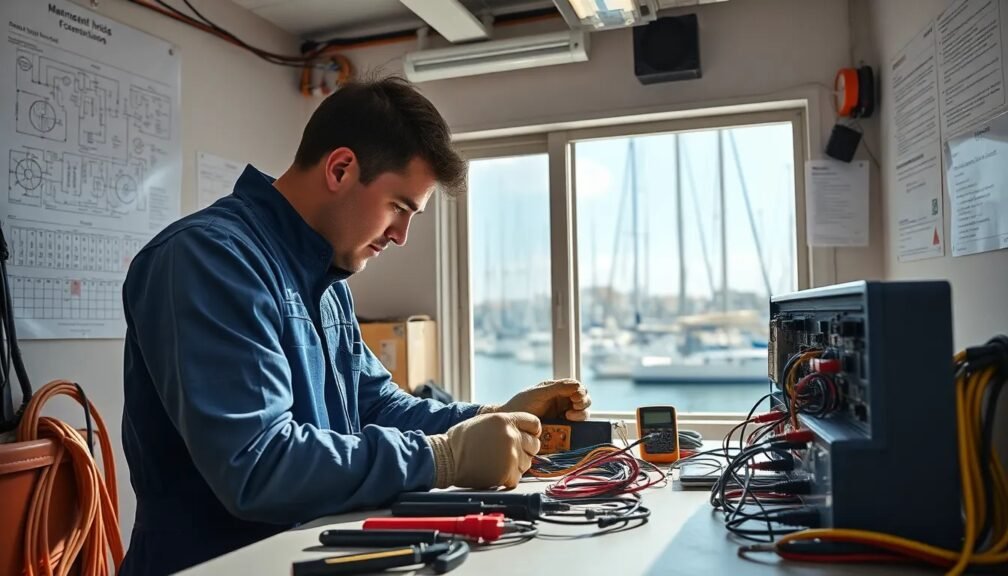
Before you can effectively repair any electrical issue, you must diagnose the problem accurately. Use a multimeter to check voltage, continuity, and resistance. This tool is essential for identifying faulty components.
- Voltage Testing: Measure battery voltage to ensure it is fully charged.
- Continuity Testing: Check for breaks in wires or connections.
- Resistance Testing: Identify any shorts or excessive resistance that could indicate a problem.
2. Master Basic Wiring Techniques
Understanding how to wire your boat’s electrical system correctly can prevent a lot of future issues. Familiarize yourself with these essential techniques:
- Use Marine-Grade Wire: Opt for tinned copper wire to resist corrosion. Ensure the wire gauge is appropriate for the circuit.
- Proper Connections: Use heat-shrink or waterproof connectors instead of standard ones to maintain integrity. Solder connections can minimize corrosion risk.
- Route Wires Safely: Avoid sharp edges and moving parts when running wires. Secure them with cable ties or looms.
3. Keep Components Clean
Regular maintenance of electrical connections can extend the life of your marine system. Here’s how:
- Corrosion Inhibitors: Apply marine-grade grease or anti-corrosion spray on connectors and terminals to prevent corrosion.
- Regular Inspections: Periodically check connections and wiring for signs of wear or corrosion.
4. Upgrade to Efficient Components
If you’re facing repeated electrical issues, it might be time for upgrades. Consider these options:
- LED Lighting: Replacing incandescent bulbs with LED lights can save power and reduce the load on your electrical system.
- Smart Devices: Upgrade to modern devices that monitor energy use and provide data to help diagnose issues.
Troubleshooting Common Marine Electrical Repair Problems
Battery Troubles
Batteries are often the source of electrical issues. Here’s how to troubleshoot common battery problems:
- Check Charging System: Ensure the alternator is functioning correctly. A faulty alternator won’t charge the battery, leading to power loss.
- Battery Health: Test the battery’s health using a multimeter or load tester. Replace if it shows signs of failure.
Circuit Breaker Issues
Circuit breakers protect your boat’s electrical system from overloads. If they repeatedly trip, follow these troubleshooting tips:
- Identify Overloaded Circuits: Check for too many devices on one circuit. Redistribute loads if necessary.
- Inspect Breakers: Examine for signs of overheating or damage, and replace faulty breakers.
Tackling Faulty Wiring
In many cases, damaged wiring is the root cause of electrical problems. Here’s a step-by-step approach to repair it:
- Identify Damaged Sections: Use a multimeter to locate faulty wires.
- Remove Damaged Wire: Cut the wire back to a healthy section.
- Splice Correctly: Use marine-grade connectors or solder for splicing, as this ensures strong and weatherproof connections.
Knowing When to Call in the Pros
While many marine electrical repairs can be tackled by diligent DIY enthusiasts, some issues are best left to professionals:
- Complicated Systems: If your electrical system integrates with navigational equipment, consulting a specialist is advisable.
- High Voltage Work: Avoid working with high voltage systems unless you are highly experienced or certified.
Conclusion: Empower Your Marine Electrical Repair Skills
Marine electrical repair is a necessary skill for boat owners, helping you understand and troubleshoot common issues effectively. By diagnosing problems accurately, using high-quality materials, and performing regular maintenance, you can enhance the reliability of your onboard electrical systems. Remember, while DIY repairs can save costs, safety should always be your top priority.
Actionable Insights
- Educate Yourself: Invest time in learning about your boat’s electrical system.
- Invest in Quality Tools: Quality tools can make repairs easier and ensure safety.
- Regular Maintenance: Schedule regular inspections of your electrical systems to catch problems early.
By following these tips, you’ll be well-equipped to handle your marine electrical repair needs, ensuring a safer and more enjoyable experience on the water.